Venomous spider management in Central Texas requires an accurate biological approach rather than broad chemical spraying. In established Austin properties, southern black widows build irregular, high-tensile webs in…
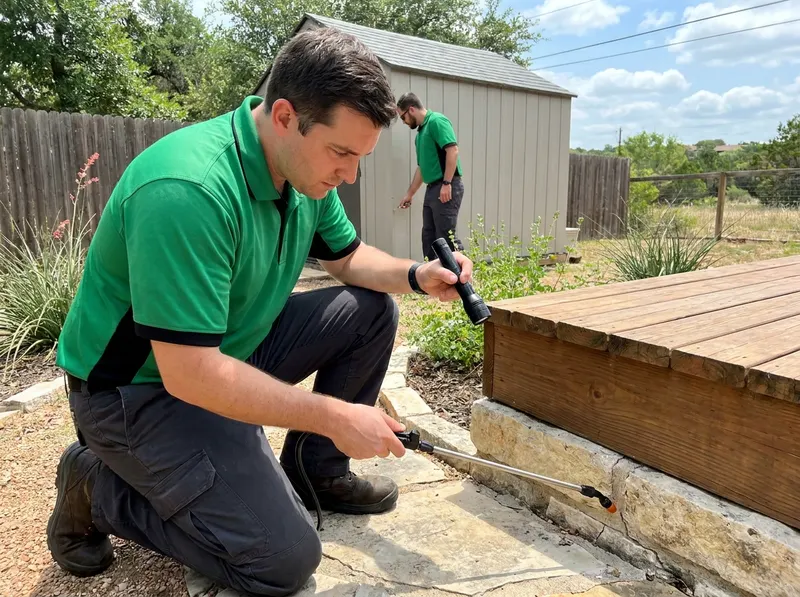
Venomous spider management in Central Texas requires an accurate biological approach rather than broad chemical spraying. In established Austin properties, southern black widows build irregular, high-tensile webs in low-disturbance zones such as irrigation valve boxes, masonry weep screeds, and limestone retaining walls, while brown recluses seek dry, undisturbed microclimates inside cardboard storage boxes, crawlspaces, and wall cavities. Research shared by the Texas A&M AgriLife Extension Entomology network indicates that brown recluses actively avoid light and roam primarily at night to scavenge dead insects, meaning standard baseboard spray applications rarely make direct contact with the pest. RiverMint Pest Solutions addresses this behavior by inspecting physical voids, utilizing the spider identification benchmarks established by the University of Kentucky Department of Entomology, and physically removing webs and egg sacs using sealed vacuum systems to drop the reproductive population immediately.
Controlling these species in Travis County involves addressing specific structural features common to local architecture. Homes in neighborhoods like Tarrytown, Bouldin Creek, and Hyde Park frequently feature pier-and-beam foundations or detached garages where humidity fluctuates and insect prey collects. Conversely, modern slab constructions in Avery Ranch, Mueller, and Circle C Ranch present weep holes along brick veneers that permit spiders to transition between xeriscaped beds and internal framing. The Texas Commission on Environmental Quality highlights the importance of protecting local limestone aquifers from runoff, making high-volume outdoor broadcast pesticides inappropriate. RiverMint Pest Solutions deploys physical exclusion screens along weep holes and applies botanical-based dusts derived from natural pyrethrins inside dry wall voids, following guidelines from the US EPA Integrated Pest Management program. This targeted placement stops recluses inside structural pathways without exposing living areas, children, or household pets to synthetic chemical residues.
Regional weather extremes across the Colorado River basin directly alter arachnid movement patterns. Extended dry heat above 100 degrees Fahrenheit forces black widows out of parched yard perimeters toward moist exterior hose bibs, air conditioning condensation lines, and shaded entryways near Lady Bird Lake and Zilker Metropolitan Park. Heavy flash-flood events documented by the National Weather Service Austin/San Antonio prompt subterranean insects to migrate upward into garage thresholds and subflooring, providing an abundant food supply that sustains spider reproduction. By cross-referencing indoor safety protocols with the NIOSH Venomous Spiders safety criteria and materials registered under the Texas Department of Agriculture Structural Pest Control Service, treatments neutralize the underlying insect food chain while keeping exterior xeriscape plants and native soils intact.
Long-term spider suppression balances physical exclusion with non-chemical habitat alteration. The UC IPM Statewide Integrated Pest Management Program emphasizes that reducing clutter and sealing entry points reduces brown recluse sightings by over 80 percent without repetitive chemical applications. RiverMint Pest Solutions installs specialized physical insect monitors to verify population decline post-treatment, adhering to structural standards recommended by the ASTM International property maintenance guides and structural wood protection measures from the USDA Forest Service. Homeowners receive an itemized, clear structural assessment that identifies weatherstripping gaps, firewood storage risks, and vegetation contact zones, delivering targeted perimeter defense and family-safe peace without high-pressure long-term contracts.
Every job gets a firm, written price after a free on-site visit.
For standards, safe disposal, and service guidance on pest control services in Austin, TX, useful references include U.S. EPA, ENERGY STAR, U.S. Dept. of Energy, Consumer.gov, U.S. Census Bureau, and Google Maps. General consumer and small-business resources are available from USA.gov, Better Business Bureau, FTC Consumer Advice, U.S. Small Business Administration, and Ready.gov.
Tell us about your brown recluse and black widow elimination job in Austin and we'll send a clear, written quote, usually the same day.
 RiverMint Pest Solutions